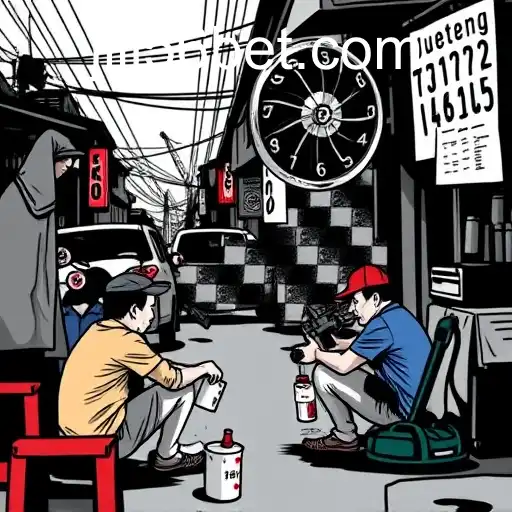
The Complex World of Jueteng: Understanding Its Pervasive Influence
A Cultural Phenomenon in the Philippines
Jueteng, an illegal numbers game that has entrenched itself deep within Filipino society, continues to be a pervasive element of the country's cultural and economic landscape. Despite numerous government efforts to eradicate it, Jueteng thrives, fueled by its deep-rooted presence in communities across the archipelago. Its resilience is in part due to the intricate web of community ties and traditions that support its existence.
Understanding Jueteng
At its core, Jueteng is a numbers game with roots that trace back to China, later being adapted to fit the Filipino way of life. The game involves players choosing a combination of numbers and placing bets on their chosen numbers, much like a lottery. Draws are often conducted using simple and unsophisticated means, yet the excitement it induces among participants is anything but trivial. With bets as low as a few pesos, the game is accessible to individuals from all walks of life, making it a popular form of entertainment, especially in rural areas where other forms of recreation may be limited.
Economic Implications: The Driving Force
While Jueteng is met with moral and legal opposition, its economic role cannot be ignored. For many, it is not just a game but a source of livelihood. Collectors, or cobradores, earn commissions from the bets they collect, which provides a necessary income stream in economically challenging areas. Moreover, some patrons are lured by the promise of quick riches, supplementing their otherwise modest incomes through potential winnings. However, the economic incentives do not stop at individuals alone; communities sometimes benefit from the largesse of Jueteng operators, who contribute to local projects and community events, fostering a symbiotic relationship that aids the game's persistence.
The Political Nexus
The illegal nature of Jueteng means it relies on an intricate network of protection to function uninterrupted, often implicating local officials and law enforcement in a dance of bribery and corruption. The political ramifications of Jueteng are vast, as it has been known to influence electoral outcomes. Candidates allegedly receive financial backing from Jueteng lords in exchange for future protection and influence, perpetuating a cycle that entwines the game with the country's political machinery.
Attempts at Legalization and Regulation
Recognizing its deep-seated influence, various administrations have attempted to regulate Jueteng by introducing alternatives like the Small Town Lottery (STL), aimed at providing a legal avenue for such gambling activities. Yet, these efforts often fall short due to the staunch loyalty of Jueteng's patrons, who view STL as an imitation lacking the grassroots authenticity of its predecessor. Regulation and legalization, thus, remain a contentious topic among policymakers, who grapple with the moral implications of legitimizing a previously underground activity against the backdrop of potential economic gains.
Social Consequences
Beyond its economic and political facets, Jueteng's social impact is significant. For some, it represents a form of exploitation, preying on the hopes of the impoverished who dream of financial windfalls as an escape from poverty. This aspect of the game has drawn sharp criticism from various social sectors, who argue that it exacerbates existing societal inequalities. Conversely, advocates highlight the sense of community and solidarity that Jueteng fosters, as neighborhoods come together in the shared experience of gaming and the communal activities funded by some of the game’s proceeds.
The Modern Landscape
As technology advances, Jueteng has shown adaptability, integrating digital means for collecting bets and ensuing draws. This modernization presents new challenges for law enforcement, who must now contend with an evolving entity that continually adapts to circumvent crackdowns. Despite its illegal status, the game remains visible, highlighted by the ease with which one can discuss it without fear of significant repercussions. Jueteng’s ability to adapt and persist is a testament to its deep-seated role within the Filipino socioeconomic fabric.
The Role of JILI56
As modern gambling evolves, platforms like JILI56 have emerged, offering digital gaming solutions that cater to a similar demographic as traditional games like Jueteng. These platforms present both challenges and opportunities for stakeholders looking to transition from illegal to legalized gambling structures. They offer an intriguing glimpse into future possibilities where technology can either be an ally or a threat to existing paradigms. JILI56, through its innovative approach, could act as a harbinger for change, shaping the way such games are perceived and engaged with in the coming years.
A Continuing Legacy
The story of Jueteng is one of cultural entrenchment, economic necessity, and political influence, painting a complex picture of an activity that is as much a part of Filipino identity as it is a subject of controversy. As the country navigates its economic challenges, Jueteng remains a constant, intertwining itself with various aspects of daily life. Understanding its role requires a nuanced approach that acknowledges its deep roots and the multifaceted issues it presents. Jueteng is not merely a numbers game; it is a profound societal phenomenon that reflects both the resilience and challenges of the communities that embrace it.